I
Why Ghostlight Exists
Most creators build in isolation — a book here, a project there, a social media page that says little and demands everything. Ghostlight exists because that model wastes the most valuable thing a creative person has: a coherent point of view developed over decades of lived experience.
The name comes from the ghost light — the single bulb left burning on a stage after the audience has gone and the performers have left. It is the light that stays on so the theater does not go completely dark. It is the signal that something lives here. That the work continues even when no one is watching.
That is the purpose of this ecosystem. Not performance. Continuity.
II
The Work Is Not Separate
Nine books. Six albums. A 191-page fine art photography monograph. A newsletter. Legal technology. A podcast. Essays. These are not separate projects. They are the same project executed in different registers.
The books and the photographs and the music ask the same questions — about power, about identity, about what it costs to be a man in the world as it actually is, not as we were promised it would be. The medium changes. The inquiry does not.
Understanding this is the key to understanding any piece of the work. You can enter through the books or through the music or through the photography. But you will arrive at the same place: a sustained argument about how we live and what we owe each other.
III
Books as Testimony
The writing began as a way to stop things from going unwitnessed. Growing up in neighborhoods where the distance between who you were expected to become and who you actually were got measured in silence and consequence — there was a need to name what was happening. Not to explain it to people who hadn't lived it. To make it legible to the people who had.
Reflections from the Block to Becoming a Man is that testimony — Black manhood told without mythology or apology. His & Her Bottle is what happens when two people try to love each other and the world keeps teaching them not to. Crime & Poverty is the structural argument behind the human story. Spirit Walk is the reckoning after survival.
Books are testimony. They say: this happened. It mattered. Here is what it looked like from the inside.
IV
Photography as Evidence
I don't take photographs to record what I see. I take them to make a claim about what matters. That is already a philosophical act.
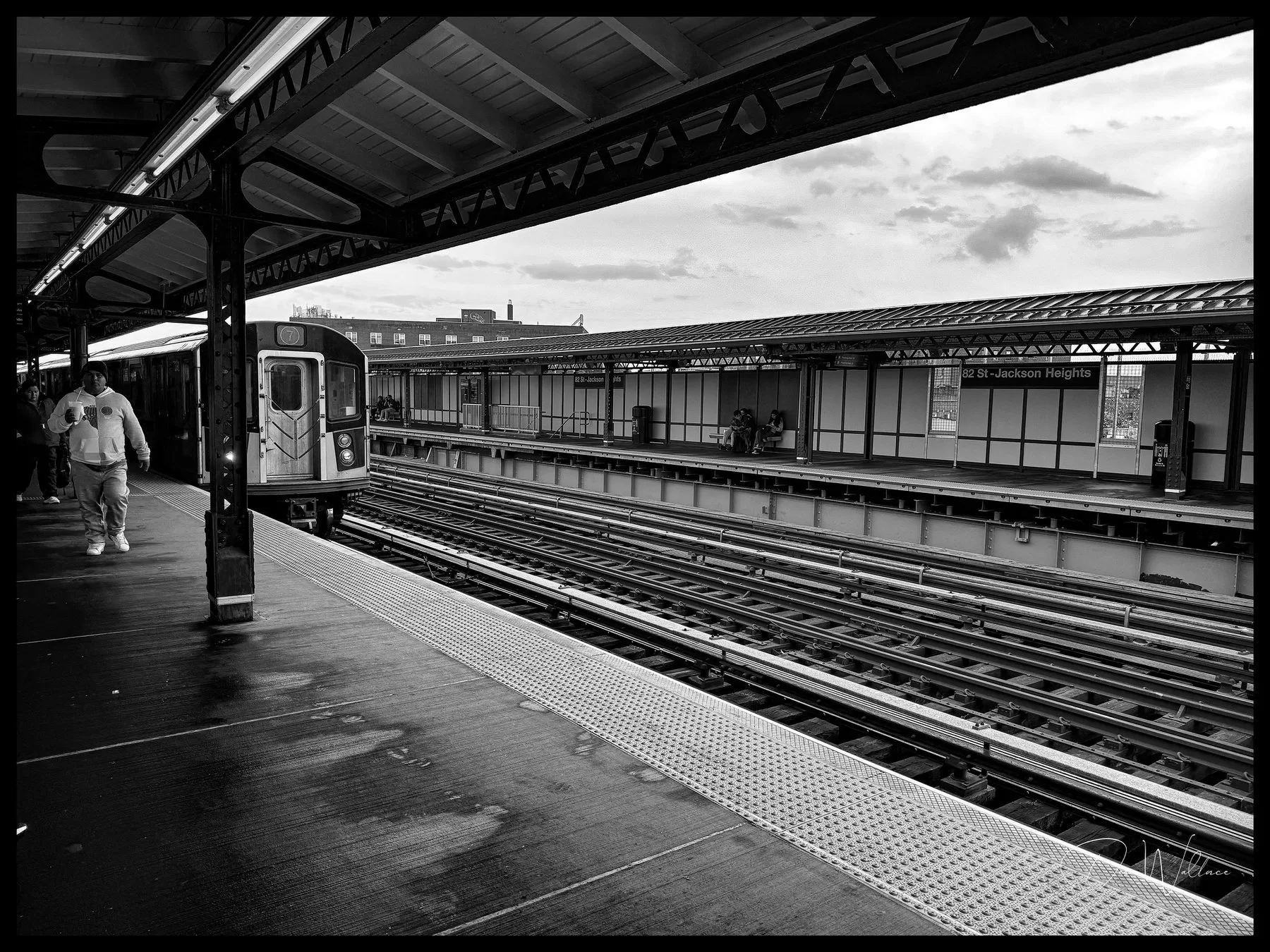
Reflections in Contrast — the 191-page fine art photography monograph — is the visual argument running parallel to the written work. Six thematic movements across three continents: Caribbean ceremony, urban architecture at night, historic stone, faces in passing, coastal horizon, and what remains when the noise stops.
The camera forces a kind of editorial discipline that prose does not. You cannot revise a photograph. The decision about what to include is made in a fraction of a second, in real space, in real light. Photography as evidence means: I was there. I looked directly at this. Here is what I saw and what I chose to say it meant.
V
Music as Atmosphere
The music does not describe the same subjects as the books. It creates the emotional conditions around them. Six albums — Borrowed Time, Blue Amber, Crash Panda, Sire, The Perfect In-Between, A.D. — are atmospheric records. Introspective. Urban. Built for the same interior space the writing occupies.
The difference is that music operates below language. It reaches the places that argument cannot. A book can explain the cost of ambition. A record can make you feel it in real time, without explanation, without structure, without conclusion.
The music and the books ask the same questions. The difference is only in how silence lands between the notes versus the sentences.

VI
B-Legal as Infrastructure
B-Legal is the legal technology layer of the Ghostlight ecosystem — a platform built at the intersection of law, criminal justice, and the communities that those systems most affect.
It is infrastructure. Legal access is not a luxury. It is a condition for everything else — for stability, for family, for the ability to build something that lasts. B-Legal exists because the books and the essays and the lived experience of New York City made one thing clear: the gap between the people who understand the legal system and the people who are subject to it is a gap that destroys lives.
Technology can close that gap. B-Legal is the attempt to build the tool that does it.
VII
The Newsletter as the Inner Room
The Ghostlight Letter is where the work becomes personal. Not in the sense of confession — in the sense of depth. Essays that go further than the books can go in a first reading. Behind-the-work notes. Photography context. Music releases. The questions that haven't become books yet because they haven't been asked clearly enough yet.
The newsletter exists because some conversations are too important to leave to the algorithm. Social media rewards the surface. The letter rewards the people who want to go deeper — who are willing to read something that takes more than thirty seconds, because they understand that the questions worth asking require more than thirty seconds.
The Ghostlight Letter is the inner room. The place where the work is still becoming itself.
VIII
The Long Game: Legacy, Ownership, and Memory
This is not built for now. None of it is. The books are not written for this news cycle. The photographs are not taken for this season's aesthetic. The music is not produced for this platform's algorithm. B-Legal is not designed to trend. The letter is not written to go viral.
Everything in the Ghostlight ecosystem is built on the assumption that the work will outlast the moment it was created in. That the questions it asks — about power, about identity, about what we owe each other — will still be worth asking in twenty years. That the body of work, taken together, will constitute something: an argument, a record, a contribution.
Legacy is not what you leave behind. It is what you build while you are still here, with enough intention that it continues to matter after you are gone. Ownership is what makes that possible — owning the work, the intellectual property, the platforms, the relationships with readers.
Memory is what the work is made of. Not nostalgia. Precision. The refusal to let experience dissolve into abstraction. The insistence that what happened, happened — and that the people it happened to deserve to have it named with clarity and without apology.
That is Ghostlight. That is the system behind the work.